
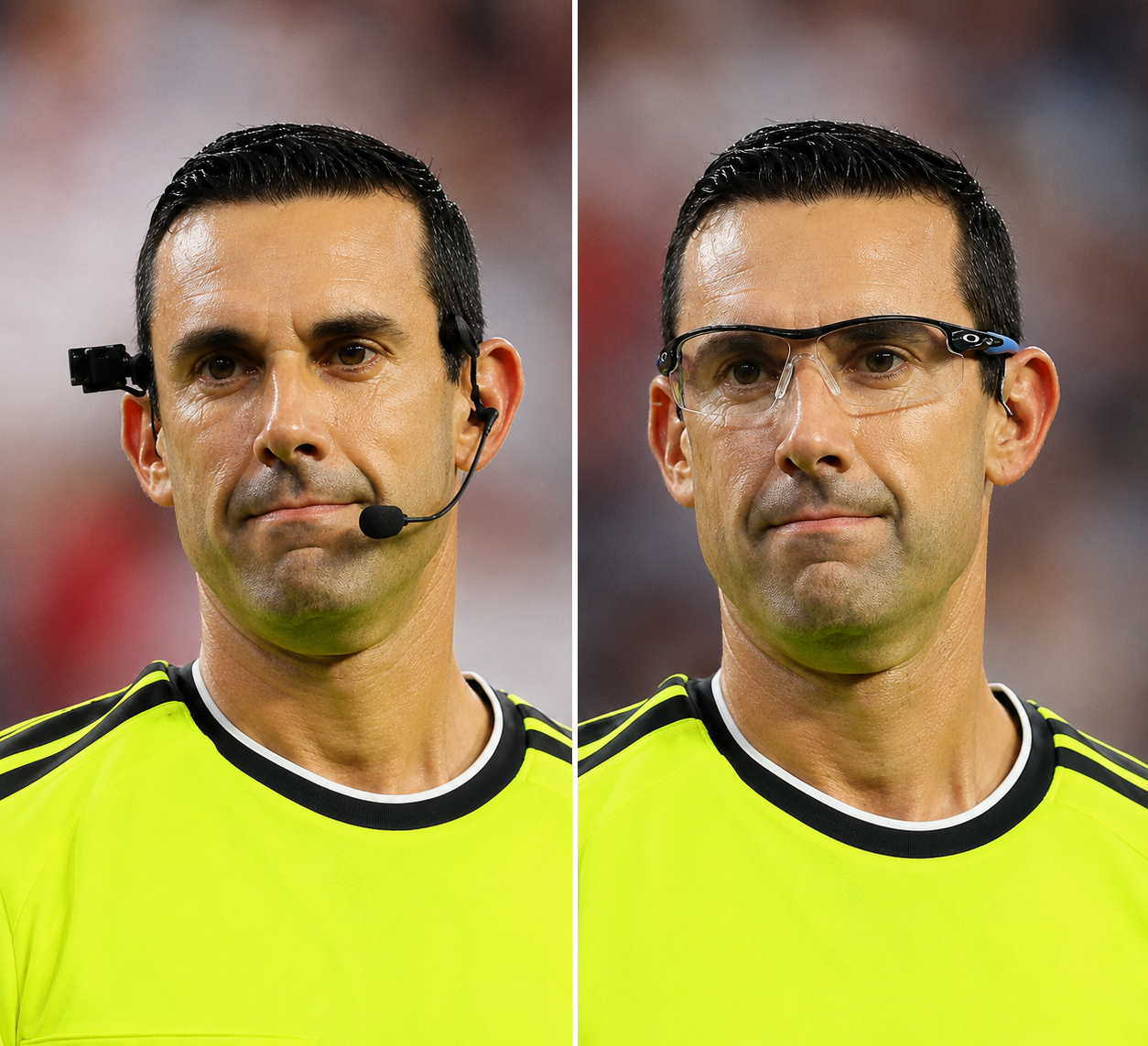
FIFA deserves credit for pushing referee technology forward, but the current execution still feels clunky. The camera mounted to the side of the referee’s head gives broadcasters a valuable first-person view, yet visually it looks oversized, heavy, and awkward. At the highest level of sport, the equipment should disappear into the performance. Instead, the referee looks like he is wearing a prototype.
The biggest issue is size and weight. A referee is constantly sprinting, turning, communicating, and managing pressure in real time. Any extra hardware on the head matters. A bulky camera creates visual imbalance, adds unnecessary weight, and risks becoming distracting for both the official and the audience. The technology may be useful, but the form factor feels behind the moment.
This is where FIFA missed an obvious opportunity with Meta AR. A pair of clear Oakley-style Meta glasses could have delivered the same referee POV in a cleaner, lighter, and more modern way. The camera, audio, communication, and future AR prompts could all live inside one wearable device instead of being split across a headset, microphone, and large external camera.
The World Cup is not just where football is played. It is where the future of the sport is shown to the world. FIFA had a chance to make referee technology look seamless, premium, and next-generation. Instead, the current setup works, but it looks clunky. Meta AR glasses would have made the same idea feel lighter, smarter, and far more believable.